
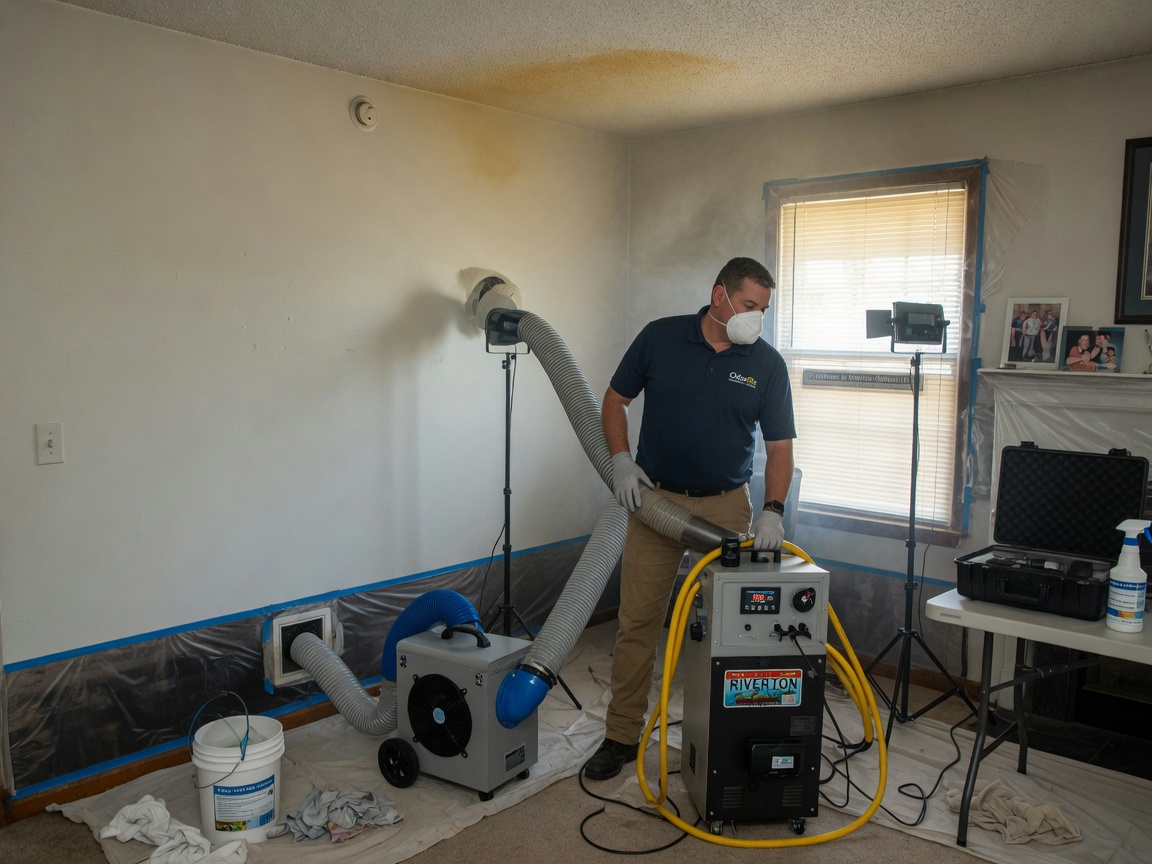
In Farmington, smoke odor removal often means treating a mix of newer homes around Station Park and established neighborhoods where odor can settle into attic insulation, HVAC runs, and soft materials after a kitchen fire or fireplace mishap. The city’s semi-arid summers can bake smoke residue deeper into porous finishes, while cold winter conditions tend to keep houses closed up, letting stale odor linger longer indoors. Homes near I-15 and US-89 also need careful separation of true fire-related smoke odor from everyday traffic dust and outside air intrusion, so the work has to be targeted instead of relying on a one-size-fits-all deodorizing pass.
Smoke Odor Removal in Farmington — What We Handle
- ✓Farmington homes often need odor work coordinated around tightly sealed winter interiors and heat-dried materials in summer.
- ✓Properties near Station Park and major corridors like I-15 and US-89 can have overlapping indoor and outdoor odor issues that need to be sorted out room by room.
- ✓Service is available in Farmington seven days a week, from 5am to 11pm.
Smoke Odor Removal Services We Offer in Farmington
✓Post-Fire Room Deodorization
Targets the primary fire area with residue-specific cleaning and odor treatment so the strongest source is reduced before smells spread back into the rest of the property.
✓Whole-House Smoke Odor Removal
For odor that has moved beyond the original loss area, this service addresses connected rooms, hallways, closets, and shared air paths that keep recontaminating cleaned spaces.
✓HVAC and Duct Smoke Odor Treatment
Smoke inside the air system can restart odor every time heating or cooling runs. We focus on accessible ductwork, registers, filters, and affected HVAC components.
✓Cabinet, Drywall, and Wood Surface Cleaning
Smoke residue clings differently to painted drywall, raw wood, and cabinetry. Material-specific cleaning helps remove odor without causing avoidable staining or finish damage.
✓Contents and Upholstery Smoke Deodorization
Soft goods and household contents often hold onto odor after the structure is cleaned. We sort what can be treated versus what is more practical to replace.
✓Seal-And-Block Odor Preparation
When odor has penetrated porous building materials, cleaning may need to be followed by an odor-blocking sealer before repairs and repainting begin.
Smoke odor removal is not the same as making a room smell better for a few days. After a fire or heavy smoke event, odor particles settle deep into porous materials like drywall, insulation, unfinished wood, carpet pad, and upholstered furniture. In Riverton homes, we often find the strongest odor is not in the most visibly damaged room, but in return-air paths, closets, attic bypasses, and cool areas where residue condensed. Effective smoke damage restoration starts with identifying the fuel source and smoke behavior—protein smoke from kitchen fires, synthetic smoke from plastics, and dry soot from fast-burning fires each respond differently. The wrong cleaning method can smear residue, drive odor deeper, or permanently etch surfaces.
A proper smoke damage cleanup plan usually combines source removal, detailed cleaning, and odor treatment in the right order. If charred debris, unsalvageable carpet pad, or smoke-loaded insulation stays in place, ozone or fogging alone will not solve the problem. Hard surfaces need residue-specific cleaning, while semi-porous materials may require sealing after cleaning if odor remains embedded. HVAC systems also need close attention because smoke can circulate through duct runs and settle on blower components, coils, and filters, then reintroduce odor every time the system runs. Around Riverton Meadows, Western Springs, and Harvest Park, we also account for how smoke moves through newer tighter homes versus older homes with more leakage and hidden cavities.
How It Works in Farmington
- 1
Inspect The Odor Path
We identify the fire source, the type of smoke residue, and how far odor traveled through rooms, closets, attics, and HVAC pathways. This determines what can be cleaned, what may need removal, and where deodorization will actually matter.
- 2
Remove Residue And Source Materials
Loose soot, debris, and heavily contaminated materials are addressed first. Odor control works best only after the physical source load has been reduced.
- 3
Clean By Material Type
We use different approaches for hard, semi-porous, and porous materials so residue is lifted instead of smeared or driven deeper. Cabinets, trim, drywall, and contents are treated according to what they are made of and how heavily they were exposed.
- 4
Apply Targeted Odor Treatment
After cleaning, we use appropriate deodorization methods for the remaining odor load and affected spaces, including areas the smoke reached but occupants may not suspect.
- 5
Verify Before Rebuild Or Reoccupancy
We recheck problem areas during normal HVAC operation and changing room conditions. If odor remains in a cavity, duct run, or porous material, it is better to catch it before painting, flooring, or finish work begins.
Serving All of Farmington
We regularly handle smoke odor removal jobs near:
- 📍Station Park
- 📍Farmington Bay Waterfowl Management Area
- 📍Downtown Farmington
Smoke Odor Removal Pricing in Farmington
Smoke odor removal in Riverton can range from a few hundred dollars for a small, contained odor issue to several thousand for whole-house post-fire smoke damage cleanup. Price depends most on how far the smoke traveled, what materials absorbed it, whether HVAC is involved, and how much source material must be removed before deodorization will hold.
Want the full picture of this service? See our Smoke Odor Removal page, or everything we do in Farmington, UT.