In Ogden, smoke damage restoration often means working in older neighborhoods tied to the city’s railroad-era growth, where soot can settle deep into original wood trim, plaster, and attic spaces after a furnace issue, kitchen fire, or garage incident. Weber County winters add another layer: once temperatures drop and homes are closed up, smoke odor tends to linger in insulation, duct runs, and upper-story rooms unless the cleanup is thorough. In summer, the hot dry climate can leave fine smoke residue clinging to porous surfaces and HVAC systems, especially in homes near busy routes like I-15, I-84, and US-89 where airflow and dust already move through the property. From houses near 25th Street to neighborhoods around Weber State University, the job in Ogden is usually about removing visible soot without missing the odor sources hidden behind walls, above ceilings, and inside ventilation pathways.
Smoke Damage Restoration in Ogden — What We Handle
- ✓Older Ogden housing can hold smoke in plaster, woodwork, and long-unused attic or basement areas.
- ✓Cold, snowy winters mean homes stay sealed up, so smoke odor gets trapped in ducts, insulation, and upper floors.
- ✓Access and scheduling around I-15, I-84, and US-89 matter when responding across Ogden from Riverton; hours are Mon–Sun, 5am–11pm.
Smoke Damage Restoration Services We Offer in Ogden
✓Emergency Smoke Damage Cleanup
Fast containment and residue removal to keep soot from spreading through the property. Early cleanup helps reduce permanent staining, odor absorption, and corrosion on finishes and fixtures.
✓Soot Removal From Walls and Ceilings
Surface-specific cleaning for painted drywall, plaster, trim, and ceilings affected by dry, oily, or protein smoke. The cleaning method is chosen to avoid smearing, gloss damage, and bleed-through before repainting.
✓Smoke Odor Removal
Source-based deodorization for rooms, cavities, HVAC pathways, and contents where smoke smell lingers after visible debris is gone. The focus is removing contamination, not covering it up with fragrance.
✓HVAC Smoke Contamination Cleaning
Inspection and cleaning of vents, returns, and nearby components when the system has moved smoke through the building. This helps reduce recurring odor and soot fallout after the rest of the structure is cleaned.
✓Contents Cleaning and Pack-Out
Sorting, documenting, and cleaning salvageable belongings such as furniture, textiles, dishes, and hard goods. Separating affected contents from clean areas prevents recontamination during restoration.
✓Cabinet and Hard-Surface Smoke Cleanup
Detailed treatment for kitchens, built-ins, stone, tile, metal, and sealed wood where oily film and odor often settle. This is especially important after cooking or appliance fires that leave sticky residue.
✓Demolition of Unsalvageable Smoke-Damaged Materials
Selective removal of insulation, drywall, carpet pad, or other porous materials that cannot be cleaned well enough to stop odor. Careful demolition protects areas that can still be restored.
Smoke damage restoration is not just wiping black residue off walls. Different fires leave different soils, and each one behaves differently once it settles into a home or building. Dry soot from a fast, hot fire can smear if it is wet cleaned too early, while greasy residue from a slow, oxygen-starved fire often bonds to cabinets, painted drywall, and HVAC grilles. In Riverton homes, we commonly see smoke move far beyond the burn area through returns, attic bypasses, and undercut doors, leaving odor in bedrooms and closets that look untouched. The right cleanup plan starts with identifying the smoke type, testing surfaces, and deciding what can be restored versus what should be removed before odors get trapped under primer or new finishes.
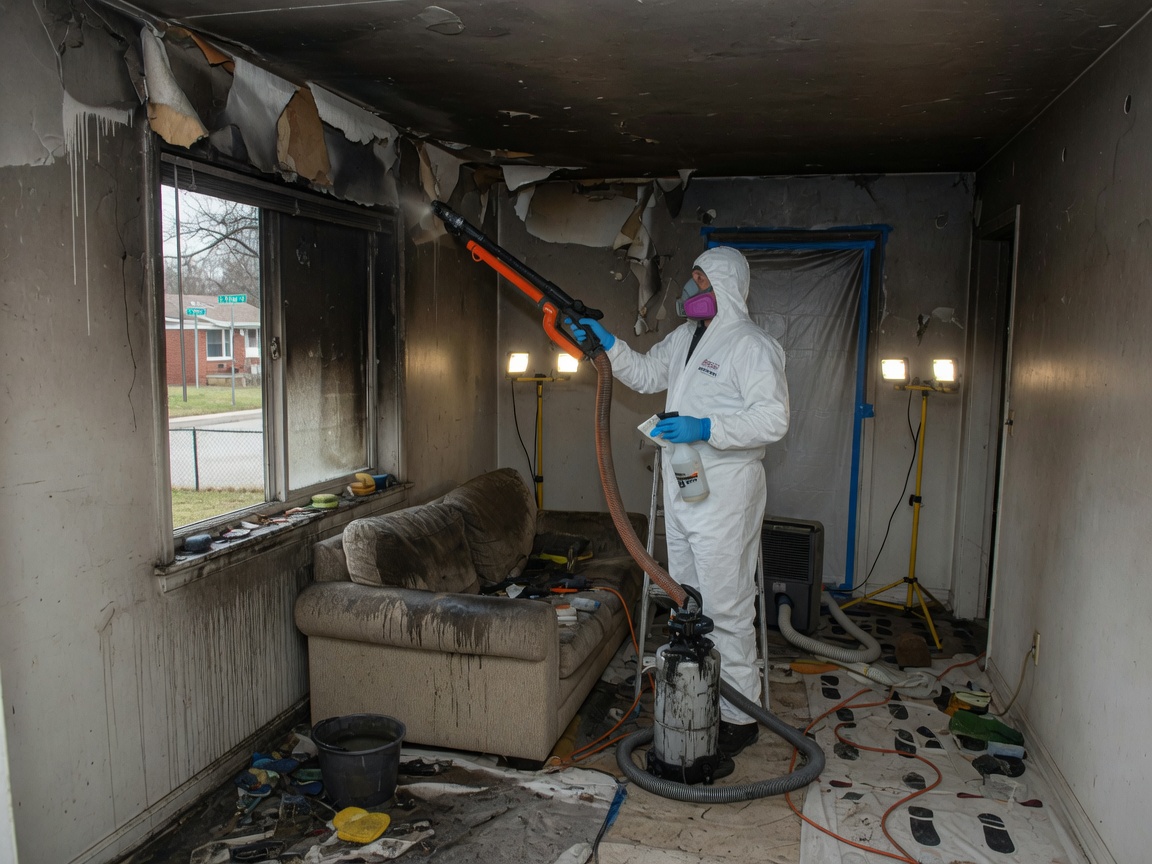
Material handling matters because smoke residues damage surfaces in different ways. Unsealed wood, acoustic ceiling texture, synthetic carpet, and porous insulation all hold odor differently than tile, glass, or sealed stone. Metal fixtures can start corroding when acidic soot is left in place, and electronics can fail later if residue is not addressed carefully. During smoke damage cleanup, contents usually need to be separated into cleanable, specialty-cleaning, and non-salvageable categories so the property does not get cross-contaminated. In Salt Lake County, once winter temperatures drop, properties that were vented after a fire can also pull in cold air and fine dust, which complicates drying and filtration. That is why controlled air movement, HEPA capture, and source removal are more reliable than simply masking odor with sprays.
How It Works in Ogden
- 1
Inspect The Damage And Identify Smoke Type
We walk the property, trace how smoke traveled, and note which materials are affected. That includes checking hidden areas like closets, attic access points, HVAC returns, and cabinet interiors so the cleanup scope matches the actual contamination.
- 2
Stabilize The Site And Stop Further Spread
We isolate affected zones, protect clean areas, and remove loose debris and dry soot using the right filtration and collection methods. This step reduces cross-contamination before deep cleaning starts.
- 3
Clean Residues From Structure And Contents
Each surface is treated based on the residue and material involved, from painted walls and trim to hard contents and textiles. Items that cannot be cleaned in place are separated for off-site or specialty cleaning.
- 4
Deodorize Hidden Sources
Once residue is removed, we address odor in cavities, porous materials, and air pathways. If materials are too saturated to restore, we recommend removal so odors do not come back after repainting or temperature changes.
- 5
Prepare For Repairs Or Final Turnover
After cleanup, we review what is restored, what still needs replacement, and what should be sealed or rebuilt next. The property is left ready for the next phase rather than cosmetically covered over.
Serving All of Ogden
We regularly handle smoke damage restoration jobs near:
- 📍Union Station
- 📍Ogden Temple
- 📍George S. Eccles Dinosaur Park
- 📍Ogden River Parkway
- 📍Weber State University
Smoke Damage Restoration Pricing in Ogden
Smoke damage restoration pricing depends mostly on how far smoke traveled, the type of residue left behind, how many porous materials are affected, and whether contents, HVAC cleaning, or demolition are needed. Small isolated jobs can stay in the hundreds, while whole-home fire and smoke cleanup can run into the thousands after inspection.
Want the full picture of this service? See our Smoke Damage Restoration page, or everything we do in Ogden, UT.